
Everything You Need to Know About UFCW Strike Benefits
In order to win the contracts that workers need and deserve, there may be times when we have no choice but to use our ultimate weapon: the strike. The strike is workers’ most powerful card to pull. With the simple act of refusing to work, we can stop the money from flowing and show the company just how valuable our labor truly is.
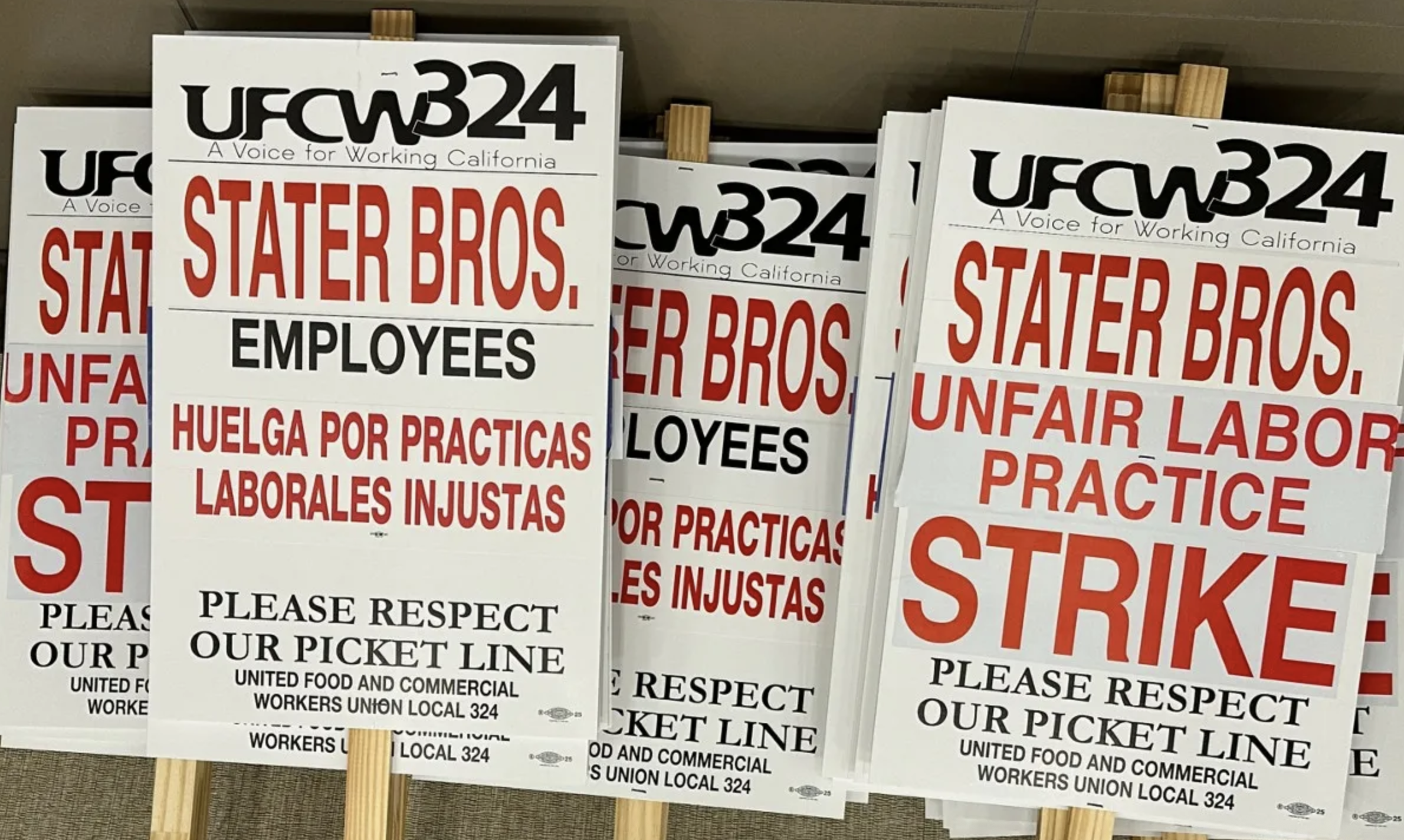
Photo courtesy of UFCW Local 324.
Strike benefits are an important part of supporting striking workers to last one day longer than the company. But many UFCW members are left in the dark about their strike benefits. This explainer is designed to demystify UFCW strike benefits — and how we can make them better.
1. Every striking UFCW member can receive strike benefits from the International union – with some important caveats.
UFCW International Strike Benefits are $250 per week. Every striking UFCW member, regardless of local union, is eligible to receive these benefits if they show up to their assigned picket shifts.
However, International Strike Benefits don’t kick in until day 8 of a strike. That means if you’re on strike for 6 days, you will receive $0 in strike benefits from the International union. If you’re on strike for 14 days, you will receive $250 total. For many workers living paycheck to paycheck, this might not be enough.
For comparison, check out some other International unions’ strike benefits:
Teamsters - 5 times the member’s monthly dues with a $200/week minimum; some Teamsters on strike against companies like Anheuser-Busch, Continental Cafe, and Mauser have had strike benefits raised to $1000/week. Strike benefits begin on Day 1 of a strike, a change made to the Teamster Constitution in 2021.
UAW - $500/week. Strike benefits begin on Day 1 of a strike, with bonuses around Thanksgiving and Christmas. First day strike pay was won by UAW reformers in the Unite All Workers for Democracy (UAWD) caucus at the 2022 UAW Convention.
The UFCW International has over $650,000,000 in total assets. In 2024, they spent a little over $2,000,000 on strike benefits. On average, the UFCW spent $666,000 annually on strike benefits from 2015 to 2022.
Strike benefits on the 8th day of a strike was a reform won at the 2023 UFCW International Convention, a change from the previous policy of benefits on the 14th day of a strike. Reformers pushed even further for benefits to begin on Day 1, but the resolution was defeated. You can see how your local union delegates voted at the 2023 Convention here.
2. International strike benefits have to be sanctioned by the International Union.
Did you know that even if members vote to authorize a strike, the strike still needs to be sanctioned by the UFCW International? This is a clause in the UFCW International Constitution. How do you get strike sanctions?
Receive a ⅔ majority vote of the membership authorizing a strike
Send a request for strike approval to the International President
Have an assigned International staff person join the bargaining table, often to take over negotiations from members at the table
Re-vote any change to the offer that the employer makes even if they only increase wages or other benefits by a small amount.
Fill out any information, including a lengthy application to the International President, including any other information he may ask for.
Hope for strike approval from the 5 person Executive Committee in Washington, D.C.
If that sounds like a lot of hoops to you, it’s because it is. Most importantly, it takes power out of the hands of the members who will actually go on strike, and places it in the hands of the International President — someone UFCW members don’t even have the right to vote for.
EW4D helped push for constitutional amendments to remove red tape and barriers to striking in 2023, but the resolution failed. We’re going to keep fighting for it at the next convention in 2028.
3. To supplement International strike pay, it’s up to your local union to build its own strike fund. Many locals do not have them at all.
Local unions can supplement strike pay from the International union by building up their own independent strike fund. Strike funds can be funded by dedicating a set amount of dues money aside specifically to build up an arsenal of cash in the event of a strike. In order to build up a strike fund from scratch, it could require small increases to dues. Reallocating money from bloated officer salaries and other expenditures can also help support growing a strike fund.
Some UFCW locals have built up their own strike funds to support striking workers to last one day longer than the company. For example:
UFCW Local 7 - In the 2025 strikes at both King Soopers (Kroger) and Safeway (Albertsons), strike benefits for workers were $800/week for full-time picketers, and $400/week for part-time picketers. Local strike benefits began on Day 1.
If your local does not have its own strike fund, you can help create one by passing a bylaws amendment. Check your local union bylaws to see how bylaws amendments can be passed in your local.
4. Strike benefits are important to outlast the company. If we want to win strong contracts, workers will need to strike and win. In order to strike and win, workers will need to be organized, united, and supported to hold out one day longer than the company can last.
If we’re not ready to strike, not making it clear to the boss that we’re ready to strike, and don’t have adequate strike pay to stay on strike, we’re leaving money and benefits on the table. The boss only gives as much as they feel they must.
When unions have large strike funds and adequate strike benefits, we show the company that we’re serious about being ready to strike if we have to.
We want to be ready to strike at any time, not just once in a blue moon. That means organizing year-round to make sure the union has a presence on the shop floor every day, and empowering rank and file members to take action and ownership in their unions.