Sooper Strike Bulletin #7 - Mon., Feb. 17th, 2025
How did other unions win big?
Coordinated bargaining increases workers’ power to win by getting rank and file members across different locals, or even across different unions, to take action together. Coordinated bargaining tells the boss that it doesn’t matter what union we’re in, we have each others’ backs.
UAW AUTOMAKERS
In October 2023, autoworkers launched their historic stand-up strike against the “Big Three” automakers (Ford, Stellantis, and GM), bargaining contracts for 150,000 workers. Workers at plants that weren’t on strike refused overtime, and the strike cost the auto companies a combined $3.6 billion.
By November, all 3 automakers agreed to the vast majority of the workers’ demands: 25% pay increases (with some workers seeing up to 88% raises!), reinstated cost of living adjustments, an end to wage tiers, shorter wage steps, re-opened plants, the right to strike, and more.
Each of the Big Three contracts represents tens of thousands of workers, and all three are bargained simultaneously. Workers doing the same job at the same company get the same contract, and they have the power in numbers to get what they deserve.
UPS TEAMSTERS
In 2023, 340,000 Teamsters fought for a national contract at UPS. The Teamsters passed a resolution in 2021 committing to coordinated bargaining, stating, “corporations take advantage of multiple individual bargaining units to bring down industry standards.” They won $7.50 raises, $21 starting pay for part-timers, an end to two-tier, and more.
What did they have in common?
National master agreements and coordinated bargaining. Both UPS Teamsters and UAW Automakers have national master agreements. For UAW members bargaining with three different companies, their contracts are aligned to expire simultaneously. Hundreds of thousands of workers bargaining together — that’s power in numbers!
Union democracy. The Teamsters and the UAW are two of just a handful of unions in the country that have a system for electing top leadership known as “one member, one vote.” This system allows each individual rank and file member of the union to vote for top leadership of the international union. Under that system, these workers built more powerful and democratic unions and won big.
ULP STRIKE & BARGAINING UPDATE
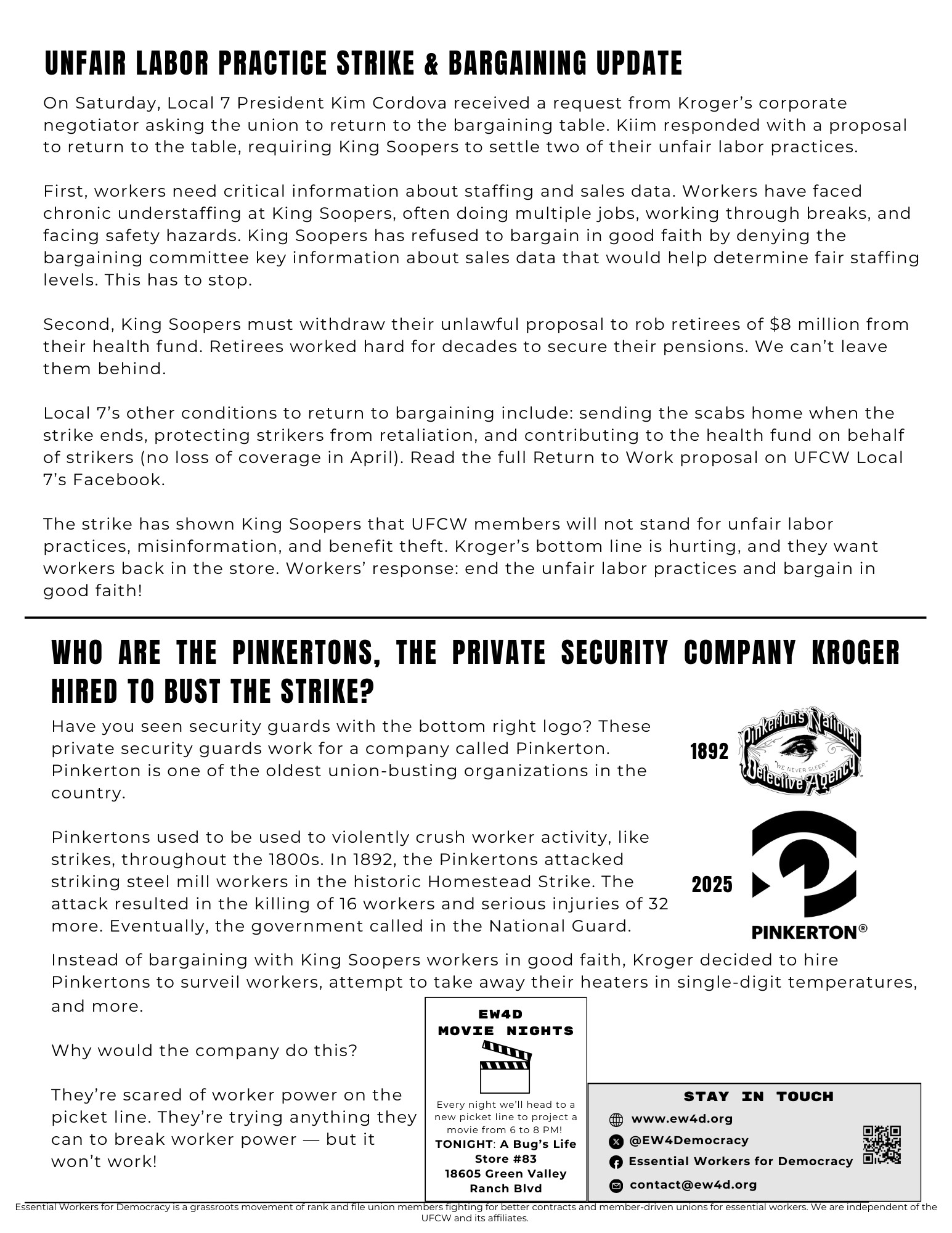
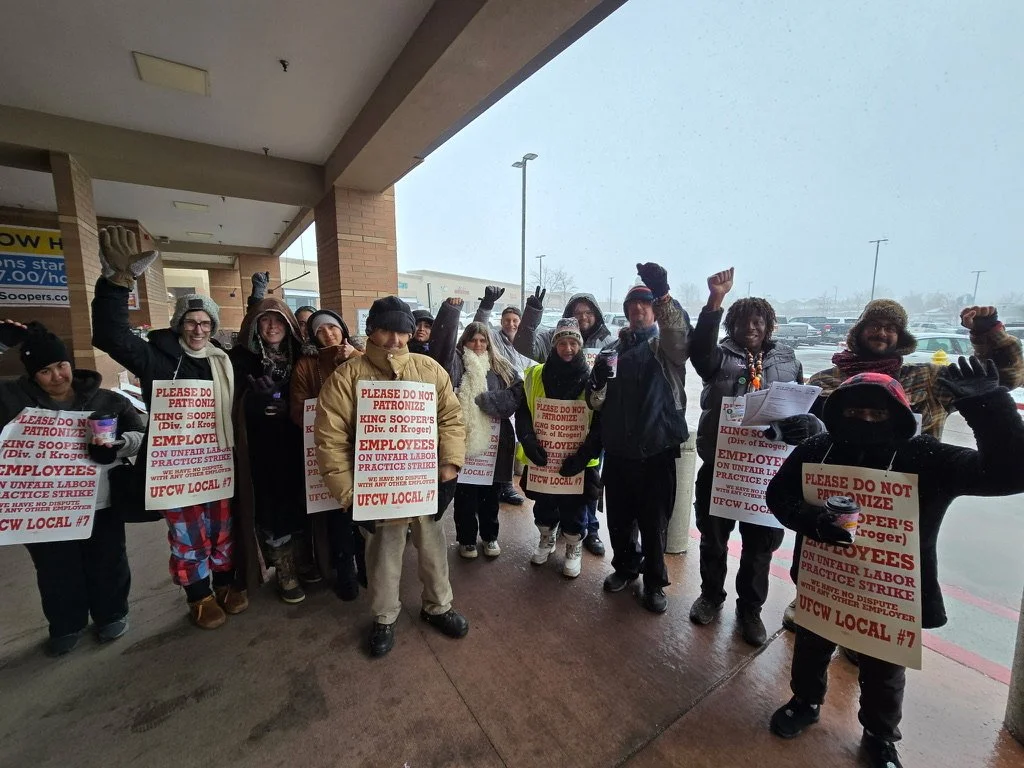
On Saturday, Local 7 President Kim Cordova received a request from Kroger’s corporate negotiator asking the union to return to the bargaining table. Kiim responded with a proposal to return to the table, requiring King Soopers to settle two of their unfair labor practices.
First, workers need critical information about staffing and sales data. Workers have faced chronic understaffing at King Soopers, often doing multiple jobs, working through breaks, and facing safety hazards. King Soopers has refused to bargain in good faith by denying the bargaining committee key information about sales data that would help determine fair staffing levels. This has to stop.
Second, King Soopers must withdraw their unlawful proposal to rob retirees of $8 million from their health fund. Retirees worked hard for decades to secure their pensions. We can’t leave them behind.
Local 7’s other conditions to return to bargaining include: sending the scabs home when the strike ends, protecting strikers from retaliation, and contributing to the health fund on behalf of strikers (no loss of coverage in April). Read the full Return to Work proposal on UFCW Local 7’s Facebook.
The strike has shown King Soopers that UFCW members will not stand for unfair labor practices, misinformation, and benefit theft. Kroger’s bottom line is hurting, and they want workers back in the store. Workers’ response: end the unfair labor practices and bargain in good faith!
WHO ARE THE PINKERTONS, THE PRIVATE SECURITY COMPANY KROGER HIRED TO BUST THE STRIKE?
Have you seen security guards with the bottom right logo? These private security guards work for a company called Pinkerton. Pinkerton is one of the oldest union-busting organizations in the country.
Pinkertons used to be used to violently crush worker activity, like strikes, throughout the 1800s. In 1892, the Pinkertons attacked striking steel mill workers in the historic Homestead Strike. The attack resulted in the killing of 16 workers and serious injuries of 32 more. Eventually, the government called in the National Guard.
Instead of bargaining with King Soopers workers in good faith, Kroger decided to hire Pinkertons to surveil workers, attempt to take away their heaters in single-digit temperatures, and more.
Why would the company do this?
They’re scared of worker power on the picket line. They’re trying anything they can to break worker power — but it won’t work!