
Kroger to Purchase Giant Eagle—What Members Think
24-year Giant Eagle worker Marc Mancini of UFCW Local 1776KS and Kroger worker Amy Reynolds of UFCW Local 700 share how the $1.65 billion Kroger-Giant Eagle merger might impact workers, and what workers can do about it.
Kroger Returns To Pittsburgh
Marc Mancini
Giant Eagle, UFCW Local 1776KS, NALC Branch 84, & IWW
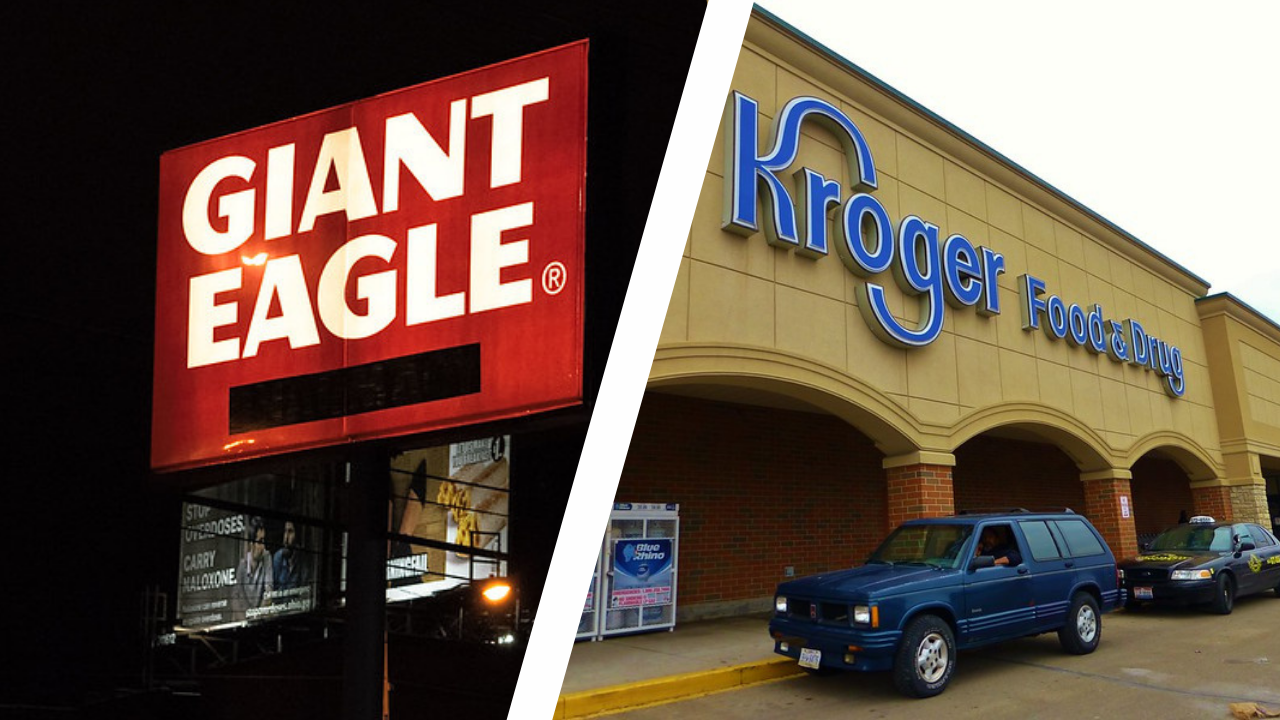
After a 42 year hiatus, Kroger is making a comeback to the steel city. On July 1st, Kroger announced it will be acquiring the regional grocery chain Giant Eagle, headquartered in Pittsburgh, Penn. The deal is set to total$1.65 billion, sending shockwaves across the region and the grocery industry.
The transaction is expected to close in 2027, and Giant Eagle will retain its name and customer perks. Kroger already holds a 43% market share in central Ohio, where many Giant Eagle stores are located. There is a high likelihood they will sell or close a few Giant Eagle locations in the Columbus, Ohio area to appease antitrust regulators, especially after the Kroger-Albertsons merger attempt was defeated by a coalition of regulators and labor unions, several UFCW locals among them.
The Ohio-based Giant Eagle locations are mostly represented by UFCW Local 880, while Pennsylvania and West Virginia locations are represented by UFCW Local 1776KS.
“The question us workers need to ask is “where do we go from here?” The answer is always the same—we have to organize to build our power to fight back. ”
In a statement given to the Akron Beacon Journal, UFCW Local 880 President Carl Green stated, “To the best of my knowledge, there will be no reduction in staff. Giant Eagle has shared it would still operate its Market Districts, stores and pharmacy as usual; it would just be a division of the Kroger corporate."
In an email sent to the members of UFCW Local 1776KS on the morning of the major announcement, President Wendell Young IV wrote:
Giant Eagle representatives assured us that the company will continue to operate under the Giant Eagle name and that the current leadership team is expected to remain in place. We were also informed that our existing union contracts will remain in effect without interruption….We are already engaged with company leadership and will continue to advocate for and protect the interests of our members throughout this transition.
As a part-time employee of Giant Eagle for 24 years and a former full-time organizer and representative of UFCW Local 1776KS (formerly Local 23), this merger did not come as a total shock. Rumors have floated for years about a potential Kroger buyout of Giant Eagle. During contract negotiations with Giant Eagle in 2018, we asked the company to address the rumors being spread in the stores regarding a potential deal for Kroger to purchase Giant Eagle. The company neither confirmed nor denied the rumors, responding something along the lines of “if the price is right, they would consider it.”
Their response reminded me of something the ruthless Gilded Age steel tycoon and robber baron Andrew Carnegie once said when he was asked what made him interested in the business of making steel. Carnegie responded, “I am not in the business of making steel; I am in the business of making money.”
This is how I would always explain Giant Eagle’s intentions to the membership—they are not in the business of buying and selling groceries; they are in the business of making money and enriching their shareholders. Their true loyalty is extracting profits, not providing services to communities or their workers, despite their claims of doing so. Their loyalty to their shareholders is so strong, they’re even willing to sell to different owners to enrich themselves despite any potential negative consequences, such as store closures or forcing concessions from workers.
It’s important to understand the history of what led up to this moment. In 1983, Giant Eagle and Kroger operated in Pittsburgh, with both companies being represented by UFCW Local 23 (now UFCW Local 1776KS). In December 1983, Giant Eagle workers went on strike over Giant Eagle’s proposed draconian wage cut of $2.00 per hour across the board. This was the time of “Reaganomics,” where employers proposing concessions to protect company profits was not uncommon. The owners of Giant Eagle made a verbal commitment to the employees that the wage cuts were only “temporary” in order to invest more into the stores and grow the company’s profits and market share to stay competitive. They “promised” the $2.00 per hour would eventually be paid back to the employees.
If the employees did not accept the wage cuts, Giant Eagle said, stores would close, workers would lose their jobs, and Giant Eagle could go out of business. This was enough to scare the employees into reluctantly voting to accept the concessionary contract and return to work, especially since workers in Pittsburgh during this time were seeing steel mills closing down. In January 1984, just weeks after Giant Eagle workers returned to work, Kroger proposed similar wage cuts across the board, and employees went out on strike. Kroger closed all the stores in the Pittsburgh region and over 2,000 union Kroger workers lost their jobs.
Over the following decades, Giant Eagle captured and dominated the Pittsburgh grocery market. In the early 2000’s, Giant Eagle partnered with oil executives and built their own (non-union) gas stations called GetGo’s and developed a customer discount program called Fuelperks where customers could earn so many cents off per gallon based on how much they spent on groceries. Such programs became replicated across the industry, including Kroger.
Despite their enormous growth and market domination, Giant Eagle’s empire slowly began to crumble not long after. More non-union competition began moving into the Pittsburgh market, including Wal-Mart, Trader Joe’s, Aldi and Whole Foods. Giant Eagle continued demanding concessions from their workers.
Currently, UFCW Local 1776KS’s contract with Giant Eagle is plagued with numerous wage and benefit tier structures. I work next to co-workers on a Sunday, which is considered a premium day, where the wage and premium pay ranges from time and half more per hour to just 50 cents more per hour, despite each of us all doing the same job. Such actions have only weakened union morale and engagement over the years.
Understanding this history, it should now come as no surprise why Giant Eagle allowed to be acquired by Kroger. The question us workers need to ask is “where do we go from here?” The answer is always the same—we have to organize to build our power to fight back. Decades of being sold concessionary contracts to allow the company to remain “competitive” and “dominate the market” has not increased our living standards or bargaining power.
Union leadership must be reminded their loyalty is to the rank and file, not to companies. They work for us, and they’re supposed to be in positions to fight for us. If they refuse to do the job they’re supposed to do, and in some cases elected to do, then it’s up to us to run for office and take back our locals. But it begins with organizing, talking with our coworkers, and building relationships with one another. These companies need to be reminded that the more they take from us, the less we have to lose. They wouldn’t exist without us. Solidarity Forever!
Kroger: money for mergers, None for Workers
Amy Reynolds
Kroger, UFCW Local 700
When companies consolidate, workers’ wages get suppressed. We in the grocery industry are in the fight for our livelihoods right now. Our backs are up against the wall. No one is going to save us but ourselves.
We’re constantly being told that our low wage contracts are the best we’re going to get. Meanwhile, these companies are not only seeing record profits, they’re spending money on anything but living wages.
Workers are fed up with living paycheck to paycheck while these companies pay so little to employees. We’ve got a simple message. We are standing together and organizing against corporate greed.