
Kroger’s New Attendance Policy: What to Know
In some Kroger divisions, the company is attempting to roll out a new time and attendance policy. Read what to know and do about it, then print and share the flyer.
Click here to print the flyer
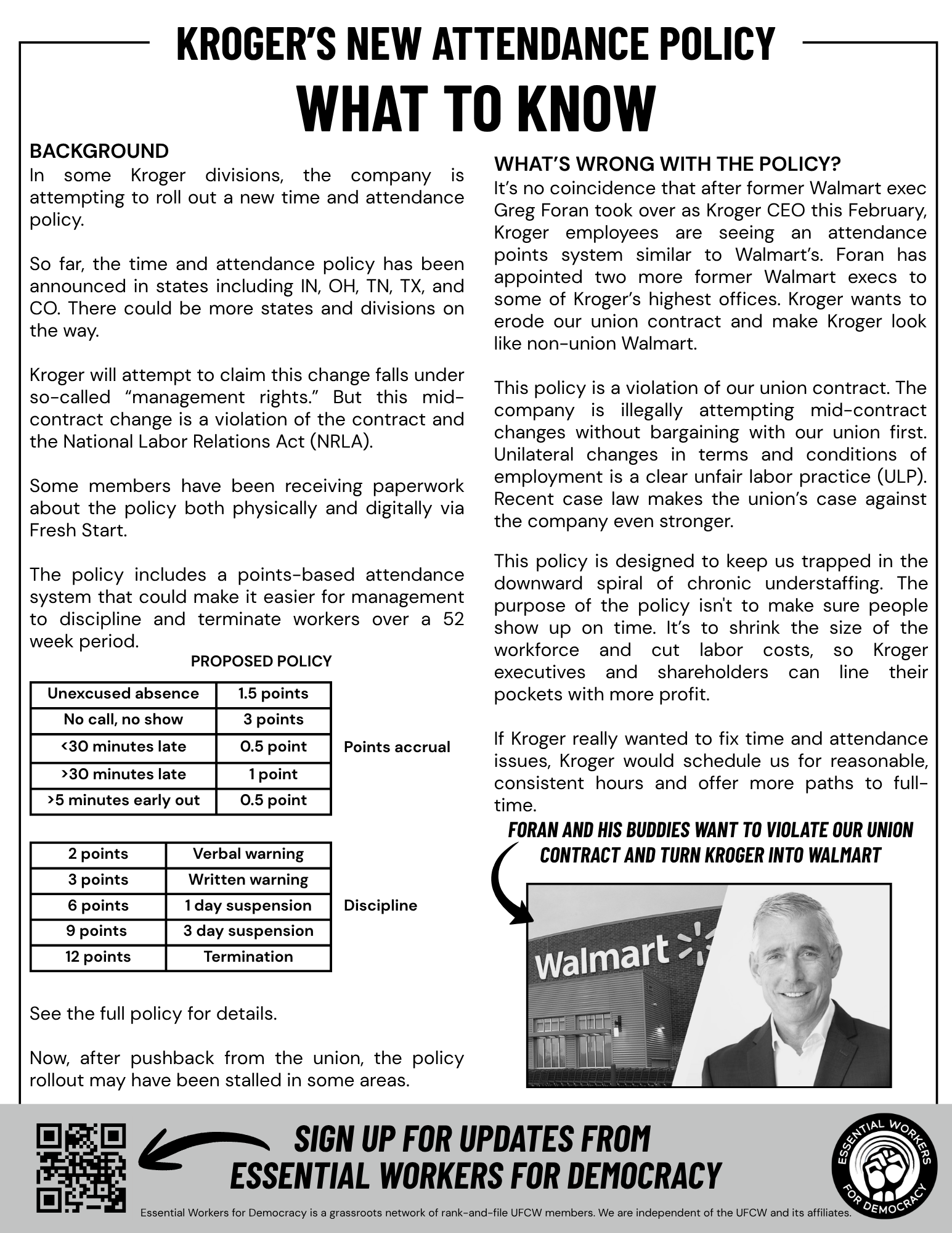
So far, the time and attendance policy has been announced in states including IN, OH, TN, TX, and CO. There may be more states and divisions on the way.
Kroger will attempt to claim this change falls under so-called “management rights.” But this mid-contract change is a violation of the contract and the National Labor Relations Act (NRLA).
Some members have been receiving paperwork about the policy both physically and digitally via Fresh Start.
The policy includes a points-based attendance system that could make it easier for management to discipline and terminate workers over a 52 week period.
See the full policy for details.
Now, after pushback from the union, the policy rollout may have been stalled in some areas.
what’s wrong with the policy?
It’s no coincidence that after former Walmart exec Greg Foran took over as Kroger CEO this February, Kroger employees are seeing an attendance points system similar to Walmart’s. Foran has appointed two more former Walmart execs to some of Kroger’s highest offices. Kroger wants to erode our union contract and make Kroger look like non-union Walmart.
This policy is a violation of our union contract. The company is illegally attempting mid-contract changes without bargaining with our union first. Unilateral changes in terms and conditions of employment is a clear unfair labor practice (ULP). Recent case law makes the union’s case against the company even stronger.
This policy is designed to keep us trapped in the downward spiral of chronic understaffing. The purpose of the policy isn't to make sure people show up on time. It’s to shrink the size of the workforce and cut labor costs, so Kroger executives and shareholders can line their pockets with more profit.
If Kroger really wanted to fix time and attendance issues, Kroger would schedule us for reasonable, consistent hours and offer more paths to full-time.
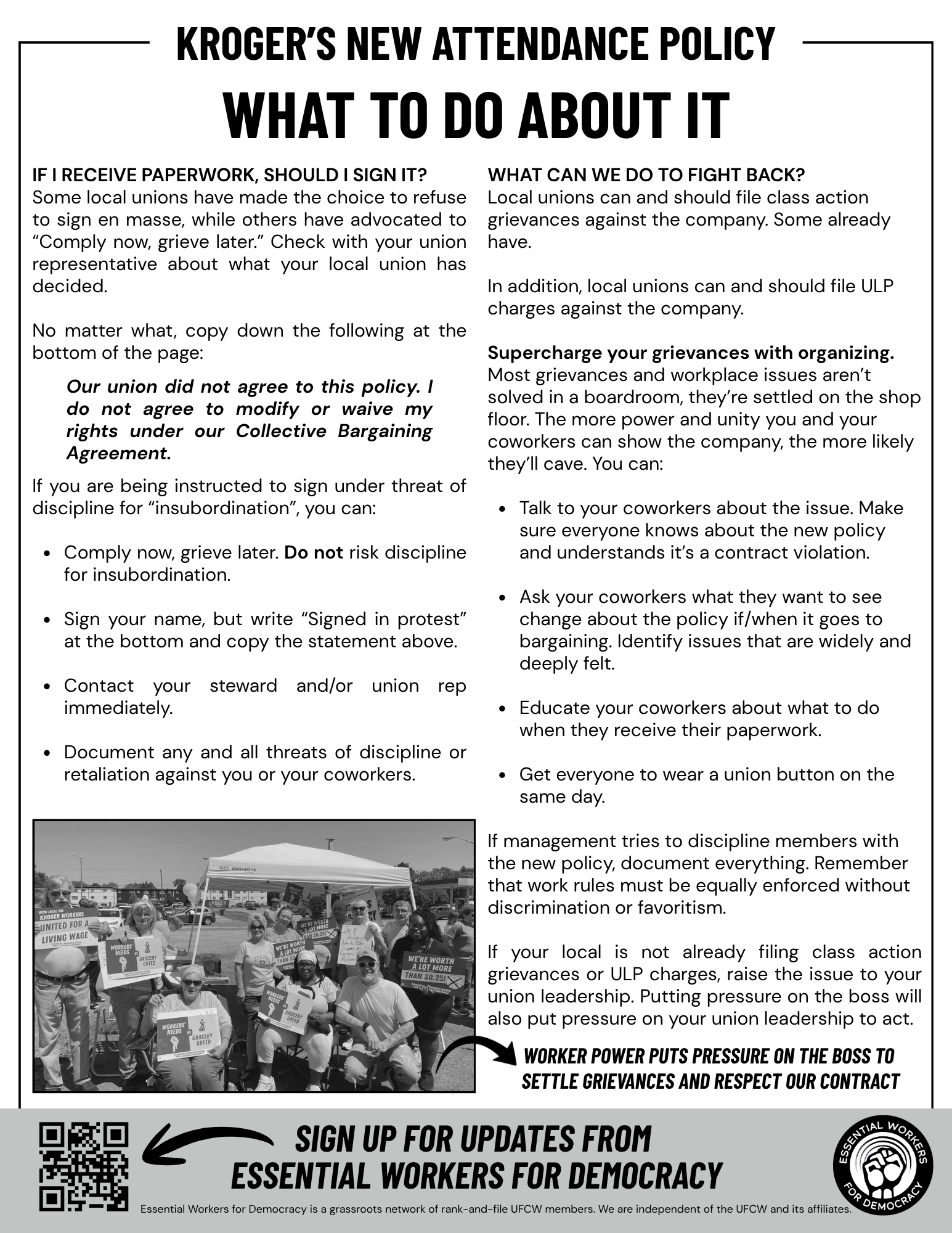
If I receive paperwork, should I sign it?
Some local unions have made the choice to refuse to sign en masse, while others have advocated to “Comply now, grieve later.” Check with your union representative about what your local union has decided.
No matter what, copy down the following at the bottom of the page:
Our union did not agree to this policy. I do not agree to modify or waive my rights under our Collective Bargaining Agreement.
If you are being instructed to sign under threat of discipline for “insubordination”, you can:
Comply now, grieve later. Do not risk discipline for insubordination.
Sign your name, but write “Signed in protest” at the bottom and copy the statement above.
Contact your steward and/or union rep immediately.
Document any and all threats of discipline or retaliation against you or your coworkers.
What can we do to fight back?
Local unions can and should file class action grievances against the company. Some already have.
In addition, local unions can and should file ULP charges against the company.
Supercharge your grievances with organizing. Most grievances and workplace issues aren’t solved in a boardroom, they’re settled on the shop floor. The more power and unity you and your coworkers can show the company, the more likely they’ll cave. You can:
Talk to your coworkers about the issue. Make sure everyone knows about the new policy and understands it’s a contract violation.
Ask your coworkers what they want to see change about the policy if/when it goes to bargaining. Identify issues that are widely and deeply felt.
Educate your coworkers about what to do when they receive their paperwork.
Get everyone to wear a union button on the same day.
If management tries to discipline members with the new policy, document everything. Remember that work rules must be equally enforced without discrimination or favoritism.
If your local is not already filing class action grievances or ULP charges, raise the issue to your union leadership. Putting pressure on the boss will also put pressure on your union leadership to act.